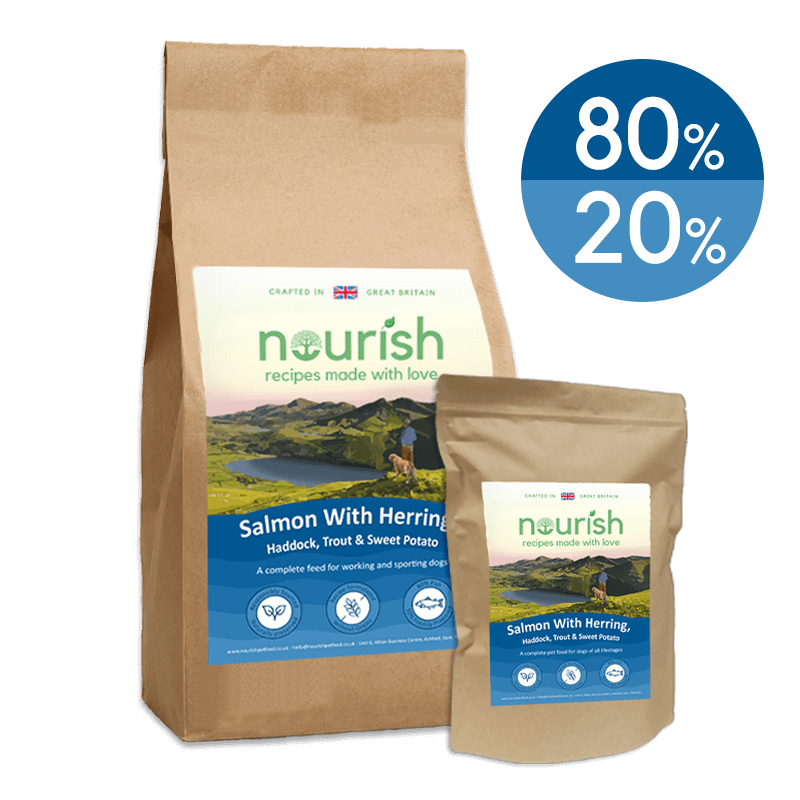
Nourish Pet Food 80/20 Grain Free Salmon with Herring, Haddock, Trout & Sweet Potato Dry Dog Food
78% meatDry · All ages
Good£5.03/kg
1 price from Pets at Home
First ingredients: freshly frozen salmon (19%), salmon meal (19%), potato, whole peas, sweet potato (13%)… All ingredients
Label checkedListed first: Freshly frozen salmon. 38% of the recipe is declared meat.
freshly frozen salmon (19%), salmon meal (19%), potato, whole peas, sweet potato (13%), pea starch, salmon oil (3.2%), dried beet pulp (3%), salmon gravy (2%), sunflower oil, fructooligosaccharides (0.25%, a natural prebiotic), mannanoligosaccharides (0.15%, a natural prebiotic), minerals
Meat named animal protein
omega-6 fatty acids: 1.7%, omega-3 fatty acids: 1.2%, calcium: 1.2%, phosphorus: 0.9%. Trace Elements: copper (II) sulphate pentahydrate (copper) 12mg, potassium iodide (iodine) 2.5mg, manganous sulphate monohydrate (manganese) 38mg, zinc oxide (zinc) 110mg, iron (II) sulphate monohydrate (iron) 66mg. Supplemented levels added at time of manufacture (/kg), Vitamins: vitamin A 62000IU, vitamin C 63mg, vitamin D3 1080IU, vitamin E 221mg, beta-carotene 2.4mg
First ingredient: “freshly frozen salmon”. It names the animal.
| On the label | We read it as | Share on the label |
|---|---|---|
| freshly frozen salmon (19%) | Named meat | 19% |
| salmon meal (19%) | Named meat | 19% |
| potato | Vegetable, fruit or plant | Not given |
| whole peas | Vegetable, fruit or plant | Not given |
| sweet potato (13%) | Vegetable, fruit or plant | 13% |
| pea starch | Vegetable, fruit or plant | Not given |
| salmon oil (3.2%) | Fat, stock, extract or other processed ingredient | 3.2% |
| dried beet pulp (3%) | Vegetable, fruit or plant | 3% |
| salmon gravy (2%) | Fat, stock, extract or other processed ingredient | 2% |
| sunflower oil | Fat, stock, extract or other processed ingredient | Not given |
| fructooligosaccharides (0.25%, a natural prebiotic) | Other | 0.3% |
| mannanoligosaccharides (0.15%, a natural prebiotic) | Other | 0.1% |
| minerals | Other | Not given |
Read automatically from the label. Spotted a misreading? Tell us
Protein 27% and carbs about 50%, with the water taken out.
| Nutrient | As sold | Dry weight |
|---|---|---|
| Protein | 24% | 27% |
| within the usual 26 to 32% for dry foods | ||
| Fat | 12% | 13% |
| Carbohydrate | ~45% | ~50% |
| within the usual 39 to 50% for dry foods | ||
| Fibre | 2.4% | 2.7% |
| Ash | 6.9% | 7.7% |
| Moisturenot on label, 10% assumed | 10% | taken out |
Carbohydrate is our estimate: what is left after the other shares. The usual range is the middle half of the dry foods we rate.
The kind of meat scored best (9 of 15). Starch scored lowest (3.4 of 20).
38% declared meat, as weighed before cooking; full marks at 100%.
Protein is 26.7% of the food with the water taken out. Nothing at 20% or less, full marks at 80%.
Estimated carbohydrate: About 49.7% carbohydrate with the water taken out (our estimate). Full marks with no carbohydrate, none at 60% or more.
How it’s made: Extruded kibble: 6 of 20. Minus 1 for added plant protein, starch or fibre.
The label lists the meat as fresh and meal, which earns 75% of these points. Fresh or raw named meat earns all of them, dried 70%, meal half, hydrolysed a quarter, an unnamed category none.
No organ meat named.
No ingredient deductions.
Each bar is as long as the points it is worth, out of 100 in all.
One scale for every food: meat (45 points), starch (20), how it’s made (20) and kind of meat (15), minus points for a few listed ingredients. It rates the recipe, not your dog.
75 and over is excellent, 60 to 74 good, 45 to 59 fair and under 45 weak.
How we rate foods →Half and half by calories with Happy Dog Pure Goat Dog Food (Sardinia) (scores 83): carbs fall from 50% to 31% by dry weight, and protein is about 39%.
Worked out from both labels, for half the day’s calories from each food. The feeding guides on the packs still set the amounts.
Best wet foods →Nothing flagged in 22 ingredients.
Beet pulp, beta-carotene (provitamin A), broth (meat stock), fructo-oligosaccharides (FOS), mannan-oligosaccharides (MOS), minerals, peas, potato, salmon, salmon oil, starch, sunflower oil, sweet potato, tocopherols (vitamin E), vitamin C (ascorbic acid)
Allowed up to a legal maximum, none declared above it: copper, iodine, iron, manganese, vitamin A (retinyl acetate), vitamin D3 (cholecalciferol), zinc
Checked against the EU Catalogue of Feed Materials and FEDIAF guidelines.
Notes come from published sources about each ingredient, not about this food. How we decide
One shop we track sells this: Pets at Home. Checked 4 Oct 2026. Up 11% since 10 Aug.
In stock first, cheapest per kg first, excluding deliveryExcluding delivery
| Shop | Pack | Price | Per kg | Link |
|---|---|---|---|---|
| Pets at Home12kg · £43.99 up 11% since 10 Aug | 12kg | £43.99 | £3.67/kg | Visit |
Since 10 Aug (3 readings): Pets at Home up 11%.
| Day | Shop | Pack | Price | Per kg |
|---|---|---|---|---|
| 4 Oct 2026 | Pets at Home | 12kg | £43.99 | £3.67/kg |
| 27 Sep 2026 | Pets at Home | 12kg | £39.59 | £3.30/kg |
| 10 Aug 2026 | Pets at Home | 12kg | £39.59 | £3.30/kg |
Cost per day and grams for your dog
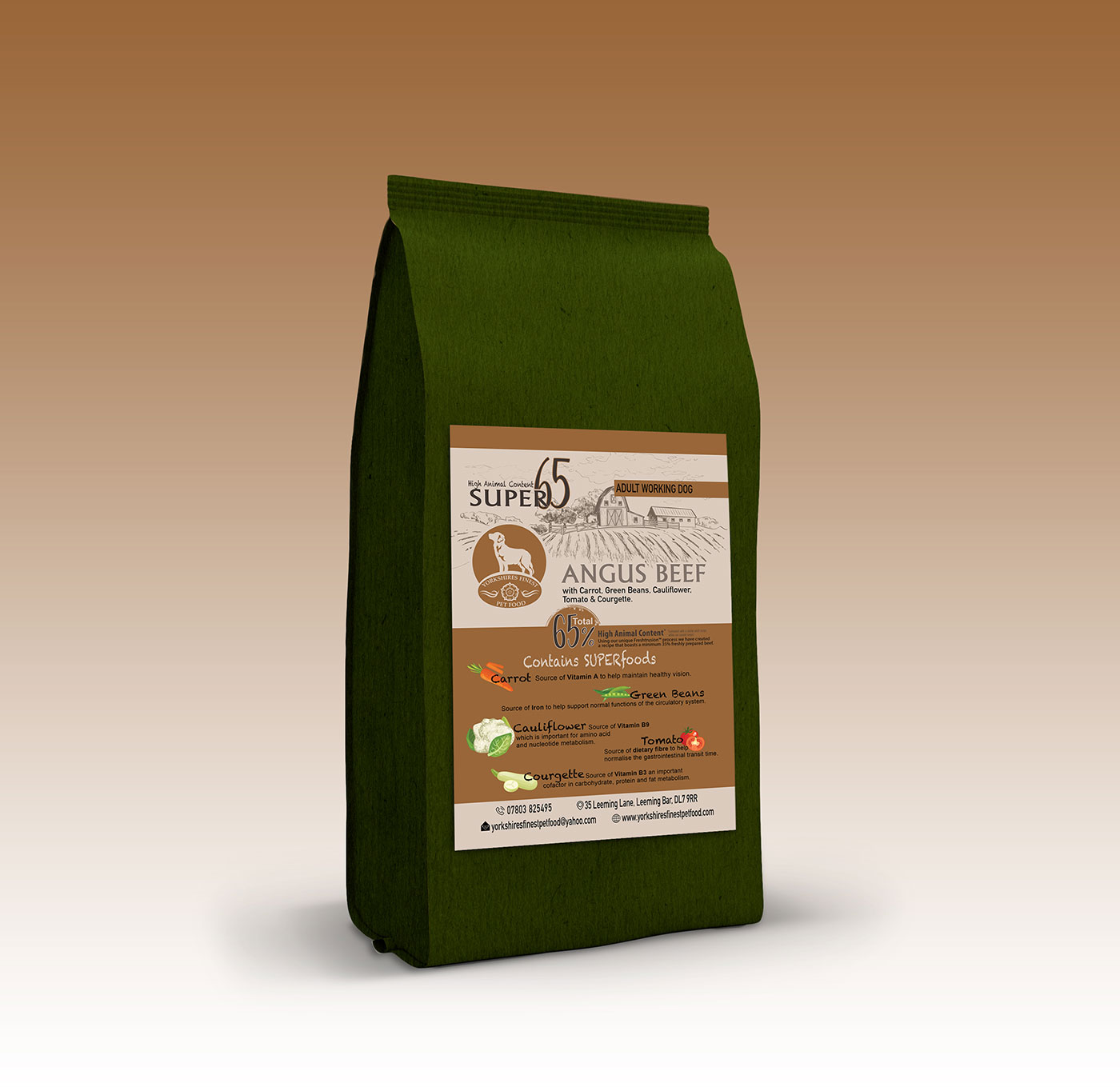
4 dry foods score 18 to 29 points higher and cost up to 19% more.
+29 pointsCompare

+26 pointsCompare

+26 pointsCompare
+18 pointsCompare
Carbs are a share of the dry food, with the water taken out.
Read from 1 shop, saved 4 Oct 2026.
Page we read, saved 4 Oct 2026: Pets at Home.
Score method v6.1.0 · ingredient notes v2.4.0
Report a mistake